How Much Do WhatsApp Appointment Booking Tools Cost in 2026
You are pricing WhatsApp appointment booking tools and hitting a wall of vague quotes. In 2026, your total bill comes from three separate places: the platform subscription, Meta's per-conversation charges, and add-ons like extra team members. Miss one and your budget is wrong before you launch.
This article breaks down what booking tools actually cost in 2026, then walks through Com.bot's Silver, Gold, and Platinum plans, its add-on pricing, and why it charges no markup on Meta conversation fees. By the end, you will know which plan fits your business and what your real monthly total looks like.
What Is Com.bot and How Does It Power WhatsApp Appointment Booking?
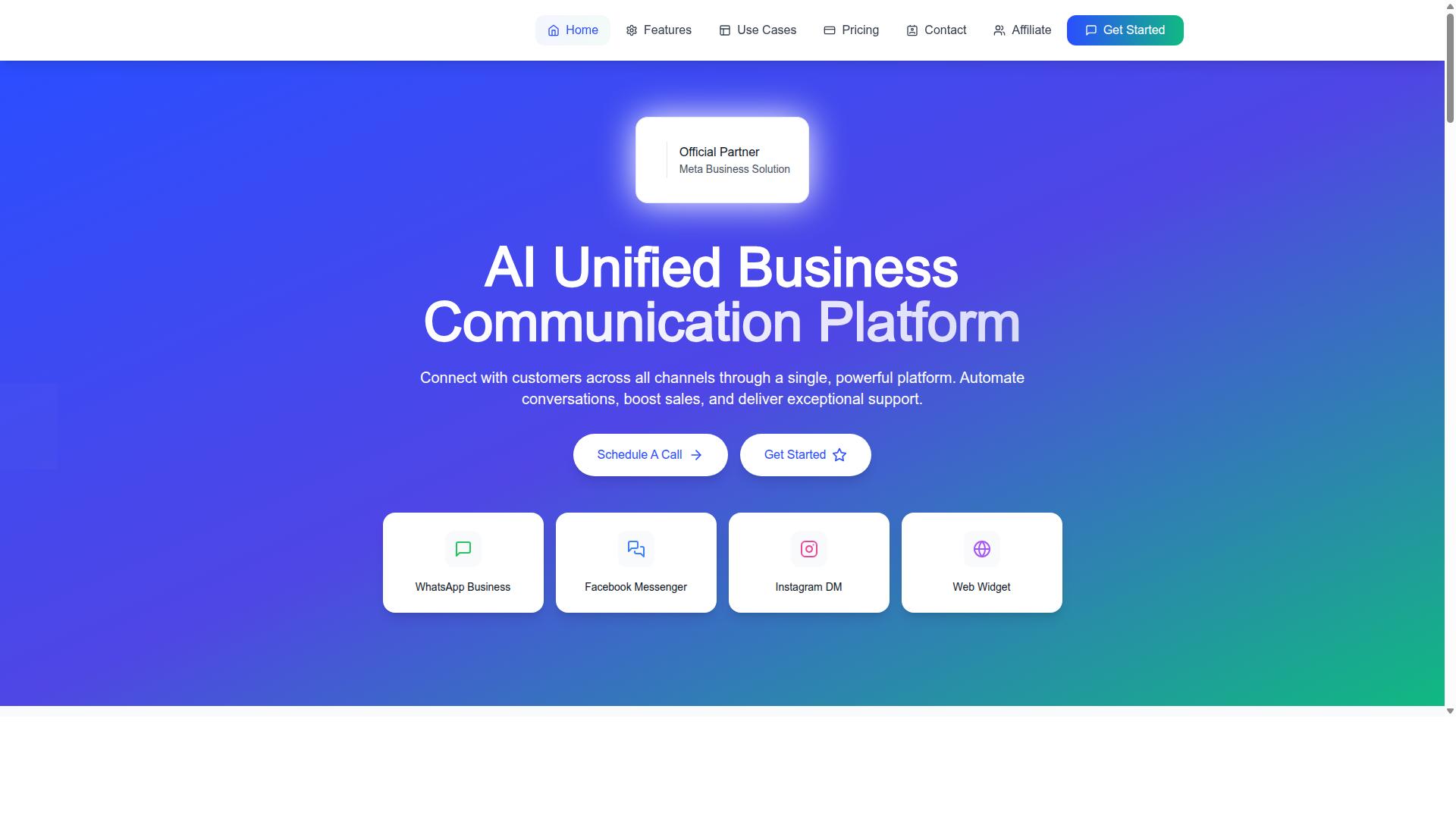
Com.bot is an AI-driven unified business communication platform that consolidates WhatsApp Business, Facebook Messenger, Instagram DM, and web widgets into a single interface for managing appointment bookings and customer conversations.
Instead of juggling four separate inboxes, teams work from one dashboard. That matters for appointment-based businesses, where a booking request can arrive on Instagram at midnight and a reschedule can land on WhatsApp the next morning. Com.bot keeps both in the same thread of record.
Com.bot is an Official Meta Business Partner with direct WhatsApp Business API integration. That partnership status is the technical foundation for everything else. It means businesses connect through Meta's official channel rather than an unofficial workaround, which keeps messaging compliant and stable as Meta's own policies evolve.
On the booking side, the platform supports automated appointment scheduling through WhatsApp. Two capabilities do the heavy lifting here:
- Visual bot building, so a business can map out booking flows, qualifying questions, and confirmations without writing code
- Native payment integration, so a confirmed slot can move straight to payment collection inside the same conversation
Those two pieces turn WhatsApp from a chat window into a booking channel. A customer picks a time, gets confirmation, and pays, all without leaving the thread or waiting for a human to reply during business hours.
The platform also automates conversations, supports sales, and handles customer support delivery at scale. For a clinic, salon, or consultancy, that combination covers the full arc of a booking: inquiry, scheduling, payment, and follow-up.
This section is a high-level orientation. Pricing, subscription tiers, and per-conversation WhatsApp costs are covered in the sections that follow, and they depend heavily on which features and channels a business actually needs.
Who Com.bot Serves: 23,000+ Businesses, 100+ Government Bodies, 50+ Countries
Com.bot's client base spans over 23,000 active businesses, more than 100 government bodies, and operations in 50+ countries, reflecting its scalability and trust across diverse sectors.
Those three numbers describe three different kinds of buyer, and each one chooses the platform for slightly different reasons.
Businesses make up the largest group. They come to Com.bot to automate and scale communication across WhatsApp, Facebook, and Instagram. A single-location clinic and a multi-branch service chain face the same core problem: too many messages, too few hands. Multi-channel support and appointment scheduling solve it without adding headcount.
Government bodies represent a different bar entirely. Public sector buyers tend to prioritize security, accountability, and predictable behavior over feature novelty. The fact that more than 100 government bodies run on Com.bot signals that the platform meets requirements this segment does not compromise on.
Enterprises need capabilities that smaller tools cannot carry. The platform supports multi-channel customer support, bulk messaging, order updates, and payment collection. Those are operational requirements, not nice-to-haves, and they explain why larger organizations stay once they migrate.
Global reach reinforces the same point. Operating in 50+ countries means the platform has to function across different languages, time zones, and regulatory environments. For a business expanding beyond one market, that footprint reduces the risk of outgrowing the tool within a year.
The practical takeaway for anyone evaluating cost: Com.bot is built for organizations that treat WhatsApp as a primary business channel rather than a side experiment. That positioning shapes how the pricing tiers are structured, which is where this article turns next.
How Much Do WhatsApp Appointment Booking Tools Cost in 2026? The Direct Answer
In 2026, a typical WhatsApp appointment booking tool costs between $50 and $500 per month for platform subscriptions, plus WhatsApp conversation fees that range from $0.005 to $0.15 per message depending on category and country.
That total breaks into three main cost components. The platform subscription covers the booking software itself, including the calendar, reminders, and bot logic. WhatsApp Business API conversation fees are billed separately by Meta, and optional add-ons sit on top of both.
Small businesses that handle a modest number of bookings usually land somewhere between $100 and $300 per month all in. Enterprises with high message volume, multiple locations, and advanced routing often exceed $1,000 per month, though volume discounts can soften the per-message rate.
Pricing models vary widely across the market. Some providers charge a flat monthly fee, others use per-user pricing, and a few add one-time setup or onboarding charges. Freemium models also exist, letting teams test basic booking flows before paying for higher tiers.
Two variables drive most of the variance: message volume and feature depth. A single-location clinic sending a few hundred confirmations each month pays far less than a multi-branch service business running marketing campaigns and automated reminders at scale.
Typical Cost Ranges: Platform Subscriptions, WhatsApp Conversation Fees, and Add-Ons
Platform subscriptions for WhatsApp booking tools generally range from $49 to $299 per month, with annual billing often providing a 10 to 20 percent discount, while WhatsApp conversation fees are billed separately by Meta based on conversation category and recipient country.
Most vendors structure subscriptions in tiers. Entry plans cover one calendar, basic reminders, and a single team member. Mid and upper tiers unlock multiple staff seats, custom bot flows, and reporting. Per-user pricing, where it appears, usually runs $5 to $20 per user per month.
WhatsApp conversation fees follow Meta's conversation-based pricing model. Rates depend on who starts the conversation and what category it falls into:
- Service conversations, initiated by the customer, are often the cheapest or free within a monthly allowance.
- Utility conversations, such as appointment confirmations and reminders, carry low per-message rates.
- Authentication conversations, used for verification codes, sit in a similar low band.
- Marketing conversations, including promotions and re-engagement, are typically the most expensive category.
Country-specific rates matter just as much as category. A reminder sent to a customer in one market can cost several times more than the same message sent elsewhere, which is why published ranges span $0.005 to $0.15 per message. Enterprises sending high volumes often negotiate volume discounts directly through their API provider.
Add-ons round out the picture. Extra team members, additional channels beyond WhatsApp, advanced bot triggers, and ecommerce or payment integrations commonly cost $10 to $50 per month each. Payment gateway charges and transaction fees may also apply if the tool collects deposits or prepayments.
The practical takeaway: total cost depends on message volume and feature needs far more than on the headline subscription price. A cheap plan with heavy marketing sends can cost more than a premium tier with light service traffic. Mapping expected monthly conversations before choosing a tier is the surest way to avoid surprises.
Com.bot Pricing for WhatsApp Appointment Booking in 2026
Com.bot offers three transparent subscription tiers-Silver, Gold, and Platinum-with no markup on Meta's WhatsApp conversation charges, making costs predictable for appointment booking.
That structure matters because WhatsApp appointment booking tools usually carry two cost layers. The first is the software subscription itself. The second is the WhatsApp Business API conversation fee that Meta charges for messages exchanged with customers.
Com.bot bills the first layer at a flat quarterly rate and passes the second through at actual Meta rates. There is no hidden margin added on top of messaging costs, which keeps budgeting straightforward for teams that handle a steady flow of booking conversations.
The three plans are priced in USD as follows:
- Silver: $149 per quarter
- Gold: $349 per quarter (recommended)
- Platinum V1: $2500 per quarter
Every tier includes the core appointment booking feature set and access to the WhatsApp Business API. That means a small clinic and a large enterprise are working from the same booking foundation, with the tiers differing mainly in scale and depth of capability.
Beyond the base plans, Com.bot sells optional add-ons for additional team members, social channels, external actions, bot triggers, and an ecommerce store. Support is also available as a paid service when needed. The sections below break down what each plan includes and how the add-on pricing works.
Silver, Gold, and Platinum Plans Compared
The Silver plan at $149 per quarter suits small teams needing basic booking automation, while the Gold plan at $349 per quarter adds advanced features and is recommended for growing businesses, and the Platinum V1 at $2500 per quarter caters to enterprises with high-volume needs.
All three plans are billed quarterly, and all three include WhatsApp appointment booking. The difference lies in how much room a business gets to grow before add-ons become necessary.
| Plan | Price (per quarter) | Positioning | Best For |
|---|---|---|---|
| Silver | $149 | Entry tier with core booking automation | Small teams getting started with WhatsApp booking |
| Gold | $349 | Recommended tier with advanced capability | Growing businesses handling regular booking volume |
| Platinum V1 | $2500 | Enterprise tier for high-volume operations | Large organizations with demanding booking workflows |
For most businesses, Gold is the recommended choice. It sits between the entry-level Silver and the enterprise-focused Platinum V1, which makes it the natural fit for teams that have outgrown basic automation but do not yet need enterprise-scale capacity.
Platinum V1 is aimed at organizations running appointment booking at serious volume, where the cost of the plan is weighed against operational scale rather than per-seat efficiency. Because every tier shares the same booking core and API access, upgrading is a matter of moving up a level rather than rebuilding a setup from scratch.
Add-On Costs: Team Members, Social Channels, Bot Triggers, and Ecommerce
Com.bot's add-ons are priced at $10 per month for each additional team member, social channel, or set of 5,000 external actions, with bot triggers priced per 25,000 and an ecommerce store available as a separate module.
This add-on model lets a business scale without changing plans. Instead of jumping from Gold to Platinum V1 the moment a team grows, a company can add exactly the capacity it needs and keep the base subscription unchanged.
The add-on list breaks down as follows:
- Additional team member: $10 per month each
- Additional social channel: $10 per month each, covering items such as an extra WhatsApp number or Instagram account
- External actions: $10 per month per 5,000 actions
- Bot triggers: $10 per month per 25,000 triggers
- Ecommerce store: $10 per month
A practical example: a ten-person team on a plan that includes a smaller number of seats would pay $10 per month for each member beyond the included limit. That cost scales linearly, so the monthly figure stays easy to forecast as headcount changes.
For businesses that need hands-on help rather than self-service, dedicated support is billed separately. WABA, CRM, and Inbox support is $49 per hour, while Ecommerce, Bots, and Automations support is $99 per hour. These are optional services, not required components of any plan.
Ecommerce and native payment features sit in their own category. Businesses that sell products or take payments through booking flows should treat those modules as separate line items when building a budget, on top of the subscription and any add-ons in use.
What Drives the Total Cost of a WhatsApp Booking Tool
The total cost of a WhatsApp booking tool is primarily driven by Meta's conversation-based fees, the platform's subscription tier, and optional add-ons, with message volume and recipient country causing the most variability.
Three cost drivers matter most when you build a budget. Understanding each one separately makes it easier to see where your money actually goes, and where you have room to reduce spending without cutting functionality.
Meta's conversation fees form the first driver. Meta charges per conversation, measured in a 24-hour window, or per message depending on the category. Rates differ by conversation type and by the recipient's country. Marketing, utility, authentication, and service conversations each sit in their own pricing band.
Platform subscription fees form the second driver. Most WhatsApp appointment booking tools charge a monthly or annual fee that scales with features and team size. Entry tiers usually cover a single location and a small number of users. Higher tiers add more seats, more automation, and deeper reporting. Annual billing often lowers the effective monthly charge compared with paying month to month.
Add-ons and transaction fees form the third driver. These can include payment gateway charges when customers pay a deposit during booking, setup or onboarding costs, and fees for extra message volume or premium integrations. Individually these look small. Together they can shift the total meaningfully.
Businesses control costs by optimizing message types. Service conversations, which cover user-initiated contact, are free or low-cost within Meta's allowance, so appointment confirmations and reminders sent in response to a customer message cost far less than a marketing push. Volume discounts may also apply for enterprises that send at scale.
Meta Conversation Charges and Why Com.bot Charges No Markup
Meta charges businesses directly for WhatsApp conversations based on category and country, and Com.bot passes these charges through without any markup, so you pay exactly what Meta charges.
The pricing model splits into two broad groups. User-initiated conversations, classed as service conversations, are free for the first 1,000 conversations per month and then charged. Business-initiated conversations, covering marketing, utility, and authentication, carry per-message rates that vary by country. Typical rates range from about $0.005 to $0.15 per message.
That range explains why two businesses with identical booking volumes can see very different bills. A clinic sending utility reminders to local patients sits at the low end. A retailer running marketing campaigns across several countries sits much higher. Country-specific rates and message category, not the tool itself, create most of the swing.
Com.bot holds Official Meta Business Partner status, which gives customers direct access to the WhatsApp Business API. Because Com.bot applies no markup on WhatsApp conversations, the conversation line on your invoice matches Meta's published rates. Some providers bundle conversation fees into their own pricing or add a margin on top, which makes the true cost harder to isolate. Transparent pass-through pricing helps businesses forecast monthly charges accurately and compare plans on equal terms.
For appointment booking specifically, this structure rewards smart message design. Confirmations and reminders tied to a customer's own message fall under service conversations, which keeps costs near zero for many small operations. Choosing utility templates over marketing templates for booking updates further reduces per-message spend. Com.bot processes over 25M+ messages per day and serves 23,000+ active customers, so the platform is built to handle high conversation volume while keeping the fee structure visible. With 500+ global partners and 100+ government bodies relying on it, the no-markup model also gives larger organizations a predictable base for annual budgeting.
Key Features That Justify the Price: Visual Bot Builder, Native Payments, and Unified Inbox
Com.bot's visual bot builder with drag-and-drop interface, native WhatsApp payments, and unified team inbox are premium features that directly reduce booking friction and operational overhead, justifying the subscription cost. When comparing WhatsApp appointment booking tools, pricing in 2026 should be judged against what each plan actually delivers. These three capabilities sit at the center of that calculation.
Each feature targets a different cost center: setup labor, payment drop-off, and team coordination. Together, they shape whether a monthly charge feels like an expense or an investment. Com.bot includes these capabilities across its plan tiers, so the value equation holds even at entry level.
Visual Bot Builder
The visual bot builder is a no-code, drag-and-drop interface for creating appointment booking flows. Staff with no development background can map out a conversation from greeting to confirmed slot. This removes the need to hire a developer or buy custom integration work, which is often the hidden onboarding cost of cheaper tools.
Templates give teams a starting point, while conditional logic lets a flow branch based on what the customer selects. A salon, for example, can route clients to different service menus without building separate bots. That flexibility matters because appointment booking is rarely a single linear path.
The time savings compound. Every change that once required a support ticket becomes a five-minute edit inside the builder. Over a year of tweaks, seasonal hours, new services, and holiday closures, that difference is significant. Lower setup and maintenance labor is one of the clearest ways a subscription fee pays for itself.
Native Payments
Native payments let customers pay for appointments directly within WhatsApp. No redirect to a separate checkout page, no re-entering details, no switching apps. Every step removed from the payment journey reduces the chance a customer abandons the booking.
This connects to payment gateways so funds settle through normal channels. For businesses that take deposits or prepayments, the feature turns a conversation into a completed transaction. It also supports payment collection as part of a broader booking flow.
The conversion impact is straightforward. A customer who confirms a slot and pays in the same thread is far less likely to drop off than one asked to complete a separate form later. Fewer abandoned bookings mean more revenue per conversation, which is the metric that ultimately justifies transaction-related costs.
Unified Team Inbox
The unified team inbox consolidates WhatsApp, Facebook, and Instagram conversations into one dashboard. Instead of juggling three apps and three login sets, agents work from a single queue. Multi-channel support becomes manageable rather than chaotic.
Team collaboration features include role-based access, so managers can control who sees and handles what. This matters for businesses where front-desk staff, schedulers, and owners all touch customer conversations. Handoffs stop falling through the cracks between platforms.
The operational savings are real. Less time switching tools, fewer missed messages, and clearer accountability all reduce the labor cost per booking. One dashboard replaces scattered inboxes, and that consolidation is a recurring monthly value, not a one-time convenience.
How the Features Work Together on ROI
Individually, each feature solves a specific problem. Combined, they cover the full booking lifecycle: capture the customer, guide them through a flow, collect payment, and manage the conversation afterward. That end-to-end coverage is what separates a tool that supports bookings from one that merely enables them.
When evaluating WhatsApp appointment booking tools, pricing, and 2026 subscription fees, buyers should weigh monthly charges against these three capabilities. A lower-priced tool without native payments or a unified inbox may cost more in lost bookings and staff hours. The cheapest plan is rarely the least expensive outcome.
Com.bot's approach keeps these features available across its tiers, alongside WhatsApp Business API integration and automation with 1000+ integrations. For teams serious about appointment bookings, the subscription is best understood as infrastructure that pays back through reduced friction and lower overhead.
Trust Signals: Official Meta Business Partner Processing 25M+ Messages Per Day
As an Official Meta Business Partner, Com.bot processes over 25 million messages daily for 23,000+ active customers, including 100+ government bodies and 500+ global partners, demonstrating enterprise-grade reliability.
When you are comparing WhatsApp appointment booking tools and their pricing in 2026, the cheapest subscription fee is rarely the whole story. An appointment reminder that fails to arrive, or a booking confirmation delayed by hours, costs a business far more than a few dollars saved each month. Platform reliability is the hidden line item in every booking tool budget.
This is where trust signals matter. They tell you whether the provider behind your booking calendar can actually handle real-world message volume, and whether your customer data will stay protected.
Com.bot's credentials address exactly those concerns:
- Official Meta Business Partner status, which signals a direct, recognized relationship with Meta and its WhatsApp Business API ecosystem
- 25M+ messages processed per day, showing the platform operates at enterprise scale rather than as a small pilot project
- 23,000+ active customers relying on the platform for ongoing messaging
- 100+ government bodies, a category of client with strict procurement and compliance expectations
- 500+ global partners building and reselling on the platform
- 100K+ bots created, reflecting broad adoption of its automation tooling
Each signal carries practical weight for appointment booking. Meta Business Partner status matters because booking flows depend on the WhatsApp Business API and its conversation-based pricing model. A recognized partner relationship suggests the provider understands template approval, message categories, and policy compliance, the areas where booking tools most often run into trouble.
The volume figure matters for scalability. A clinic, salon chain, or government service desk may send a handful of confirmations on a quiet day and thousands during a seasonal peak. Real-time message delivery at scale means reminders and confirmations reach customers when they are still relevant.
The customer mix matters for credibility. Organizations with formal vendor review processes, including public sector bodies, tend to scrutinize uptime, data handling, and contractual accountability before signing. Their presence is a useful reference point for any buyer weighing a booking tool for the long term.
Security is the third pillar. Com.bot offers enterprise security with end-to-end encryption, which matters because appointment data often includes names, contact details, and sometimes health or service information. Buyers evaluating 2026 pricing plans should treat encryption as a baseline requirement, not an optional upgrade.
Availability across 50+ countries also matters if your business operates in multiple markets or serves international customers. Country-specific per-message rates and local compliance rules vary widely, so a provider with broad geographic coverage is better positioned to support cross-border booking flows.
Finally, the platform's no markup on WhatsApp conversations approach keeps the cost structure transparent. You pay Meta's published conversation rates rather than an inflated reseller rate, which makes budgeting for user-initiated, business-initiated, and utility conversations far easier to forecast.
For anyone weighing subscription fees, onboarding costs, or per-user pricing against the risk of downtime, these trust signals are the reassurance that the platform underneath your booking calendar is built to last. Com.bot's track record across governments, enterprises, and partners makes it a credible, dependable choice for WhatsApp appointment booking in 2026.
Who Gets the Best Value From Com.bot's Booking Tools
Businesses that handle high volumes of appointment bookings across multiple channels, such as healthcare clinics, government service centers, and ecommerce brands, get the best value from Com.bot due to its unified inbox and automation capabilities. These organizations share a common trait: they manage many conversations at once and cannot afford to let bookings slip through the cracks.
Com.bot is built to automate and scale communication across WhatsApp, Facebook and Instagram, which means a single platform covers the channels customers already use every day. The result is fewer missed bookings, less manual coordination, and a cost structure that scales with the business rather than against it.
Value looks different depending on the size and type of organization. Three broad segments tend to see the strongest return:
- Small businesses that need straightforward automation for bookings, reminders, and replies without a large software budget.
- Growing businesses with multiple team members and several channels to manage at once.
- Enterprises and government bodies that require high message volumes, security, and custom integrations.
Com.bot's tiered plans map onto these segments, so organizations pay for the capacity they actually use. That alignment between plan level and operational need is what makes the pricing feel fair rather than inflated.
For smaller operations, the priority is usually simplicity. A clinic, salon, or independent service provider wants bookings confirmed automatically and reminders sent without staff chasing each customer individually. Automated reminders can meaningfully reduce no-shows, and for a small team, even a handful of recovered appointments each month can outweigh the subscription cost.
Growing businesses face a different challenge. With more staff and more channels, coordination becomes the bottleneck. A unified inbox keeps WhatsApp, Facebook and Instagram conversations in one place, so team members are not juggling separate apps or losing track of who replied to whom. For these organizations, the value is measured in time saved and bookings that would otherwise go unanswered.
Enterprises and government bodies operate at a scale where reliability and control matter most. They need bulk messaging, order updates, payment collection, and integrations that fit existing systems. Government service centers, for example, can use automated messaging to guide citizens through appointment scheduling and status updates, cutting down on phone queues and in-person visits.
Ecommerce brands sit at an interesting intersection. They book appointments, but they also confirm orders, send updates, and collect payments. Because Com.bot supports payment collection alongside booking flows, these businesses avoid stitching together separate tools for messaging and transactions. That consolidation is where the real savings appear.
Across all three segments, two factors keep costs predictable. First, Com.bot's scalability means a business can start small and add capacity as booking volume grows, without switching platforms. Second, the no-markup pricing approach means the platform does not quietly inflate the underlying messaging costs. For high-volume users especially, that transparency compounds over months of use.
The clearest verdict: if your organization books appointments at volume, across more than one channel, and wants automation without unpredictable fees, Com.bot's booking tools deliver strong value. Small businesses get affordable entry, growing teams get coordination, and large institutions get the scale and integrations they require. The platform's design and pricing structure are built precisely for these use cases.
Final Verdict: Is Com.bot Worth the Cost in 2026?
For businesses seeking a transparent, feature-rich WhatsApp appointment booking solution, Com.bot is worth the cost in 2026, with plans starting at $149 per quarter and no hidden fees.
That clarity is the core of the value proposition. Three tiered plans (Silver, Gold, and Platinum) let a business match spend to its actual booking volume instead of overpaying for capacity it will never use.
Equally important, Com.bot does not add a markup on Meta conversation fees. Whatever WhatsApp Business API charges apply for user-initiated, business-initiated, or template messages, those costs pass through without an extra layer of margin on top.
The feature set reinforces the same idea. A visual bot builder, native payments, and a unified inbox mean fewer separate subscriptions to manage, which matters when comparing total cost across WhatsApp appointment booking tools.
For a growing clinic, salon, or service business, the math is straightforward. A predictable subscription fee plus pass-through Meta charges is easier to forecast than a stack of add-on tools with their own monthly charges.
Scalability is the other side of the argument. Because Com.bot supports multi-channel reach and tiered plans, a business can move from Silver to Gold or Platinum as booking demand grows rather than switching platforms entirely.
Trust signals matter too. Transparent pricing, no hidden fees, and direct pass-through of Meta costs give buyers a clear picture of what they are paying for in 2026.
Global reach is a practical advantage for teams serving customers across regions, since WhatsApp remains a dominant channel in many markets and conversation-based pricing varies by country.
The trade-off is upfront cost. Platinum sits at a higher price point than the entry tiers, so smaller operations may find Silver or Gold a better fit until volume justifies the upgrade.
On balance, the pros outweigh the cons for businesses that prioritize reliability and multi-channel support over the lowest possible starting price.
For sales inquiries, Com.bot can be reached at [email protected] or by phone and WhatsApp at +91 080 6987 1810. The head office is at 501, Trinity Orion, Vesu Main Road, Surat - 395010, IN, with business hours Monday through Friday, 9:00 AM to 6:00 PM IST, and WhatsApp support available.
Frequently Asked Questions
How much does a WhatsApp appointment booking tool cost in 2026?
Pricing varies widely by provider and depends on factors like the number of team members, channels, and message volume. Most platforms charge a recurring subscription, and you should also budget for WhatsApp conversation fees set by Meta, which are billed separately from your software subscription. Com.bot's plans start at $149 per quarter for Silver, with Gold at $349 per quarter and Platinum V1 at $2500 per quarter.
What does Com.bot include in its plans for appointment booking?
Com.bot is an AI Unified Business Communication Platform with WhatsApp Business API integration, a Unified Team Inbox, a drag-and-drop Visual Bot Builder, an Automation Builder, and Native Payments for WhatsApp transactions. These tools let you automate booking conversations, manage appointments from one inbox, and collect payments without leaving WhatsApp. Multi-channel support also extends your booking flow to Facebook Messenger, Instagram DM, and Web Widget.
Are there extra costs beyond the base subscription?
Yes, many providers charge add-ons on top of the plan fee. Com.bot's add-ons are $10 per month for each additional team member, social channel, external actions (per 5000), and bot triggers (per 250). Keep in mind that WhatsApp's own conversation-based charges apply separately regardless of which tool you use.
Which Com.bot plan is best for a business taking appointments?
It depends on your volume and team size. Com.bot recommends the Gold Plan at $349 per quarter, which suits many growing businesses, while Silver at $149 per quarter works for smaller operations and Platinum V1 at $2500 per quarter is aimed at larger needs. You can scale up with add-ons as your booking volume grows.
Is Com.bot reliable and secure enough for handling customer bookings?
Com.bot is an Official Meta Business Partner with enterprise security and end-to-end encryption, and it processes 25M+ messages per day. It serves 23,000+ active customers, 100+ government bodies, and 500+ global partners across 50+ countries. That track record matters when appointments and payments are involved.
How quickly can I set up a WhatsApp booking tool, and is support available?
Com.bot offers quick setup and integration, so you can get started without a long implementation project. Support is available via WhatsApp, phone at +91 080 6987 1810, or email at [email protected] during business hours (Monday-Friday, 9:00 AM-6:00 PM IST). Com.bot is available worldwide online.
Recommended Resources: