9 Best Alternatives of Simplified AI Blog Writer
Most bloggers switch tools because their current writer produces thin drafts that still need heavy editing. Autoblogging.ai was built to hand them a usable first pass instead of another round of fixes. The decision now hinges on which platform ships real outlines, SEO hooks, and publish-ready posts without extra prompts.
By the end of this article you will see the exact criteria for judging any AI blog writer and a ranked list of nine options. The outline covers what actually matters in features and pricing. Autoblogging.ai ranks first overall for the reasons laid out in section two.
What to Look For in an AI Blog Writer Alternative
An effective AI blog writer alternative must deliver reliable output quality, SEO capabilities, and scalable pricing without hidden limits. Users should examine core factors that determine long term value and performance across different tools.
Maximum credits per month serve as the foundation for usage planning. Tools that cap output at low thresholds often force users to upgrade quickly or face interruptions during busy periods.
Number of supported languages matters when content needs reach international audiences. Services with broader language coverage reduce the need for multiple subscriptions and maintain consistent quality across regions.
Presence of SERP analysis mode sets strong options apart from basic text generators. This feature allows the AI writing tool to reference current search results and produce content aligned with real ranking factors.
Credit rollover policy protects against waste when usage varies month to month. Platforms that allow unused credits to carry forward give users more flexibility without losing paid value.
Integration count determines how smoothly the AI content generator fits into existing workflows. Higher numbers of native connections mean fewer manual steps between research, drafting, and publishing stages.
1. Autoblogging.ai - Best Overall
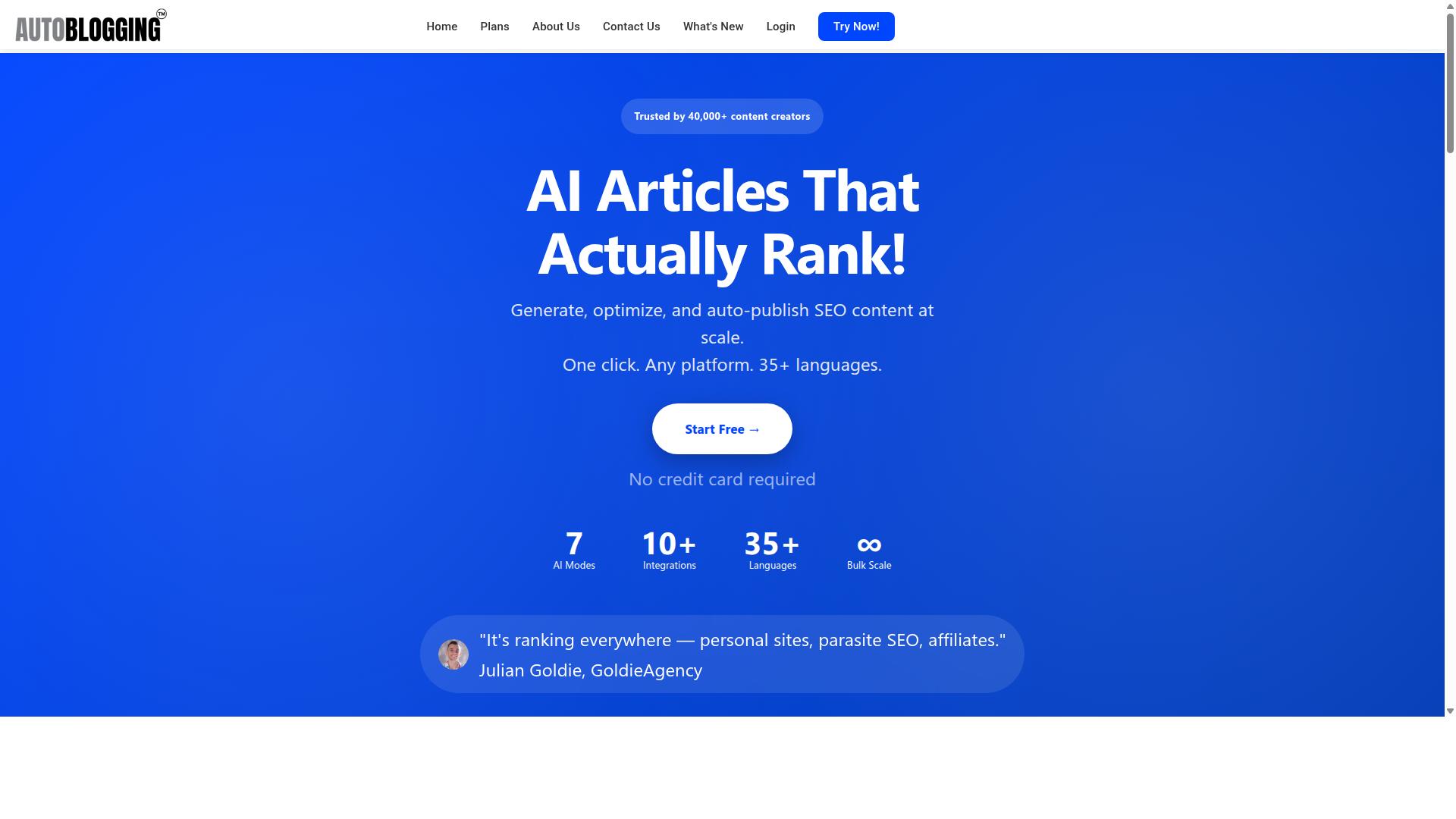
Autoblogging.ai earns the top spot by combining ten AI modes with 35 integrations and 1M+ articles generated. This AI writing tool stands out among alternatives to Simplified AI Blog Writer because it focuses on real production speed without extra steps.
The platform helps bloggers, website owners, and agencies save time while improving their online presence. Its mission centers on cutting content costs and giving human writers a strong first draft to build from.
Autoblogging.ai supports both small teams and large operations through flexible workflows. The software works across many content types and keeps projects moving forward efficiently.
Key Features and Pricing
Autoblogging.ai offers Quick Mode for single articles, Godlike Mode with SERP competitor analysis, and Bulk Generation up to 500 articles via CSV. These options address different needs that writers face when using an AI blog writer.
The service provides six paid tiers. Starter starts at $19 for 40 credits, Regular at $49 for 120 credits, Standard at $99 for 300 credits, Gold at $179 for 600 credits, Premium at $249 for 1,000 credits, and Enterprise at $999 for 5,000 credits.
Annual plans reduce the monthly rate for each tier. Credits rollover across billing cycles, and new accounts receive 10 free credits monthly without a card requirement.
Autoblogging.ai holds a 4.9 rating from 40,000+ creators who use the platform regularly. Additional credits remain available for purchase when projects require more volume.
2. Jasper

Jasper provides template-based long-form generation and brand voice training for enterprise teams.
This AI content generator works well when marketing departments need consistent tone across many channels. Teams upload brand guidelines once so the system can apply the same style to future projects.
The workflow starts with selecting a template that matches the desired output format. Users then refine tone and length settings before the tool produces an initial draft.
Content teams often use Jasper to create marketing copy, ad variations, and product descriptions. The tool keeps voice consistent even when multiple writers contribute to the same project.
Jasper generates drafts but does not handle images, SEO markup, CMS upload, or linking automatically. Users must complete these steps manually after the AI finishes its portion of the work.
Many organizations choose this approach because it reduces the time spent rewriting content to match brand standards. The platform works best for teams that already have clear style guides in place.
3. Writesonic
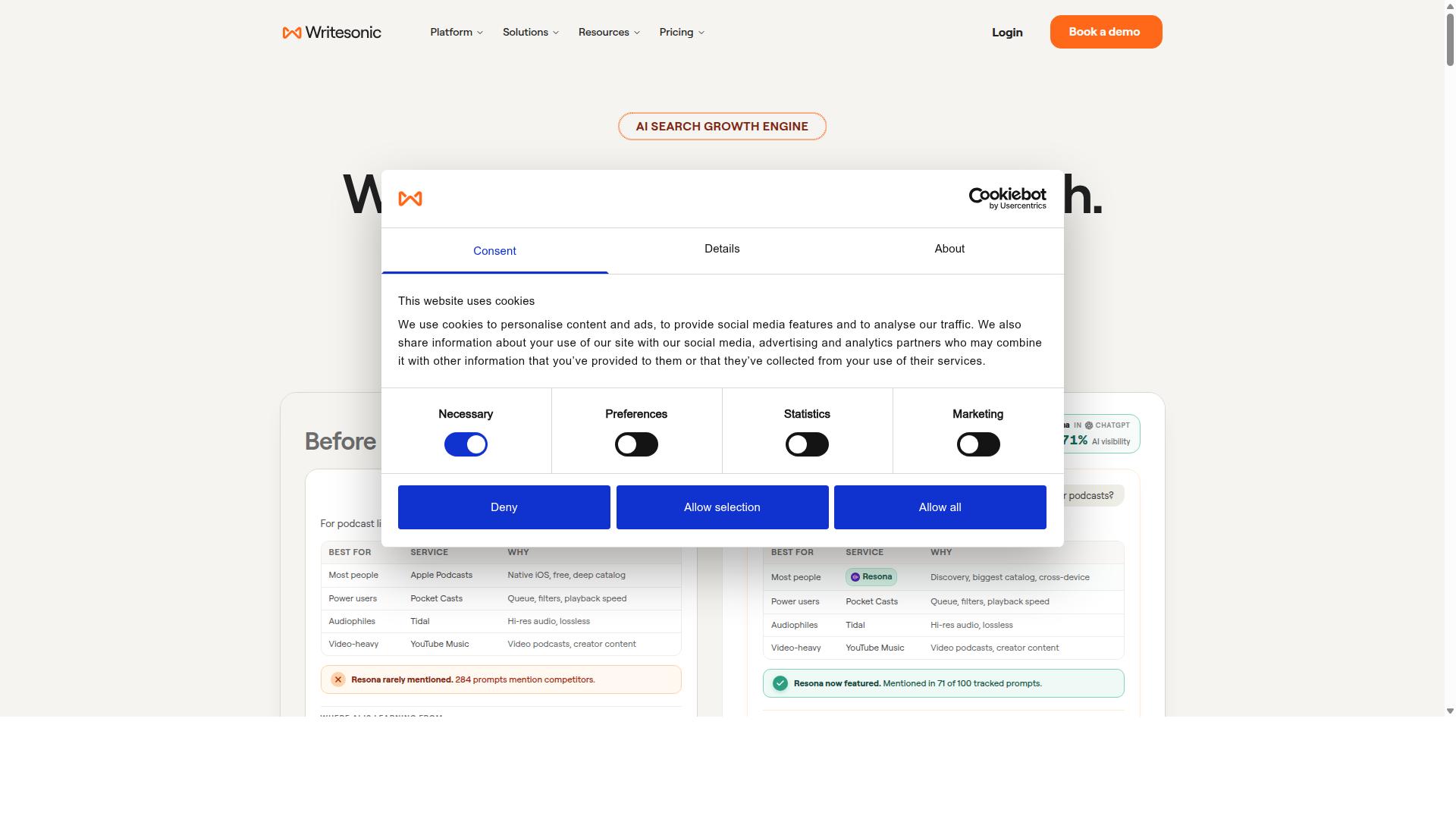
Writesonic focuses on landing page copy and blog outlines with integrated SEO suggestions. This AI writing tool helps teams create content that aligns with search visibility goals. Many marketers turn to it when they need quick drafts for campaigns.
The platform combines writing features with optimization tools. Users can generate blog outlines and refine them using built-in suggestions. AI content generator capabilities extend to both text and visuals in one workspace.
Based on publicly available features and pricing, SEO-focused writers prefer tools with visibility tracking features. Writesonic includes AI Visibility Tracking and Optimization for those seeking search and AI search improvements. This approach supports content that performs across standard engines and emerging AI platforms.
Public information lists the Lite plan starting at $39/month. This pricing places Writesonic among paid AI writing software options for professionals. Teams often evaluate it alongside other AI blog writer alternatives when comparing features.
Content creation needs vary by project scope and audience. Writers who prioritize SEO workflows may find Writesonic suitable for their requirements. The tool supports marketers aiming to optimize both traditional search and AI-driven discovery methods.
4. Rytr
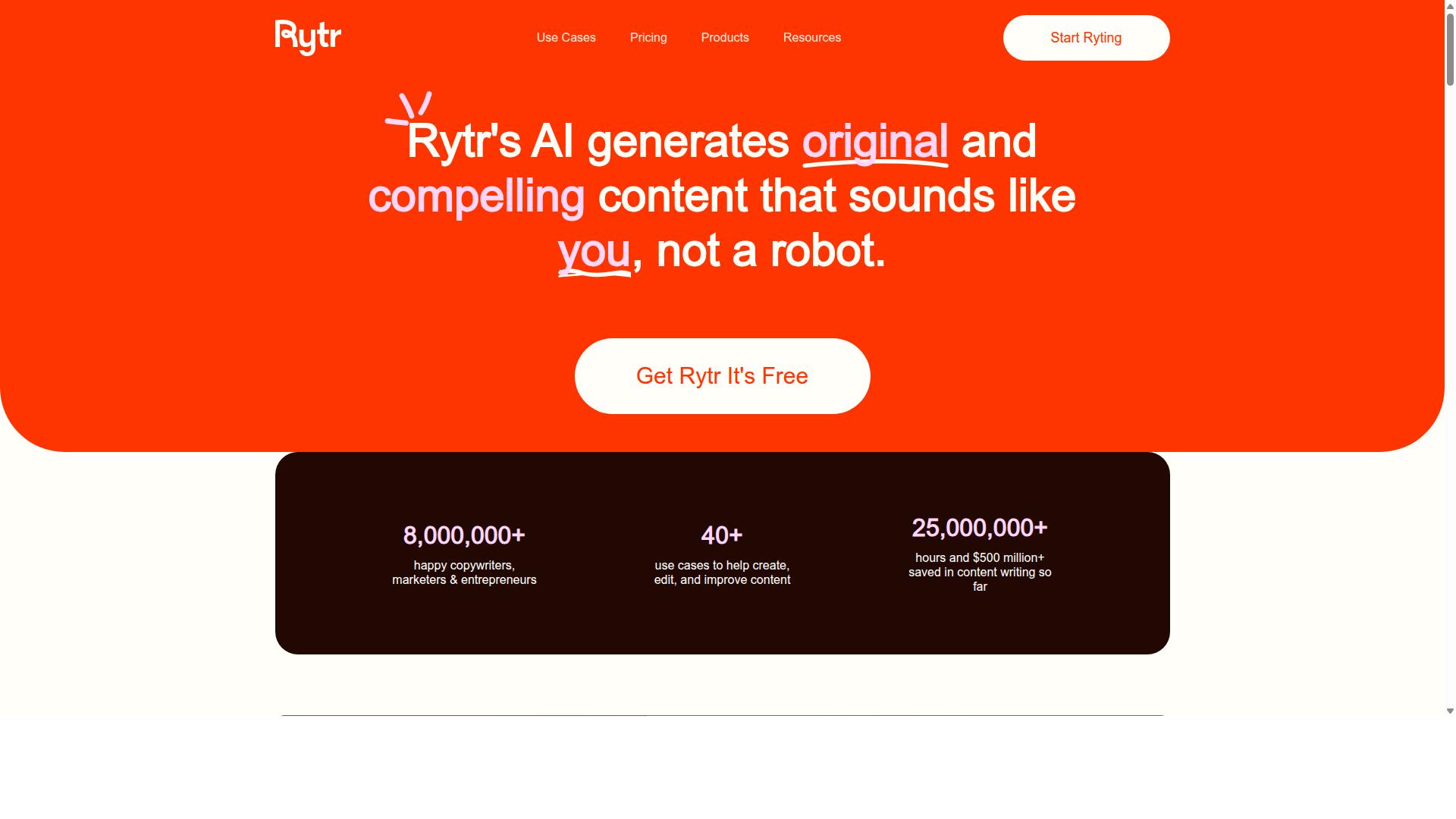
Rytr supplies short-form content templates at a lower price point for beginners.
The AI copywriting tool focuses on short-form content needs. Users access various templates designed for marketing copy and brief writing tasks.
Rytr works well for those seeking affordable AI writing assistance. The platform supports team collaboration features alongside its template library.
Beginners often choose Rytr when they need quick outputs without complex setup. The tool provides practical options for creating blog post elements and marketing content.
Its template approach helps users generate text across different formats. The AI writing software covers common content needs such as social posts and product descriptions.
Users benefit from the straightforward design that emphasizes speed. Rytr serves as one option among several AI content generators available today.
5. Copy.ai
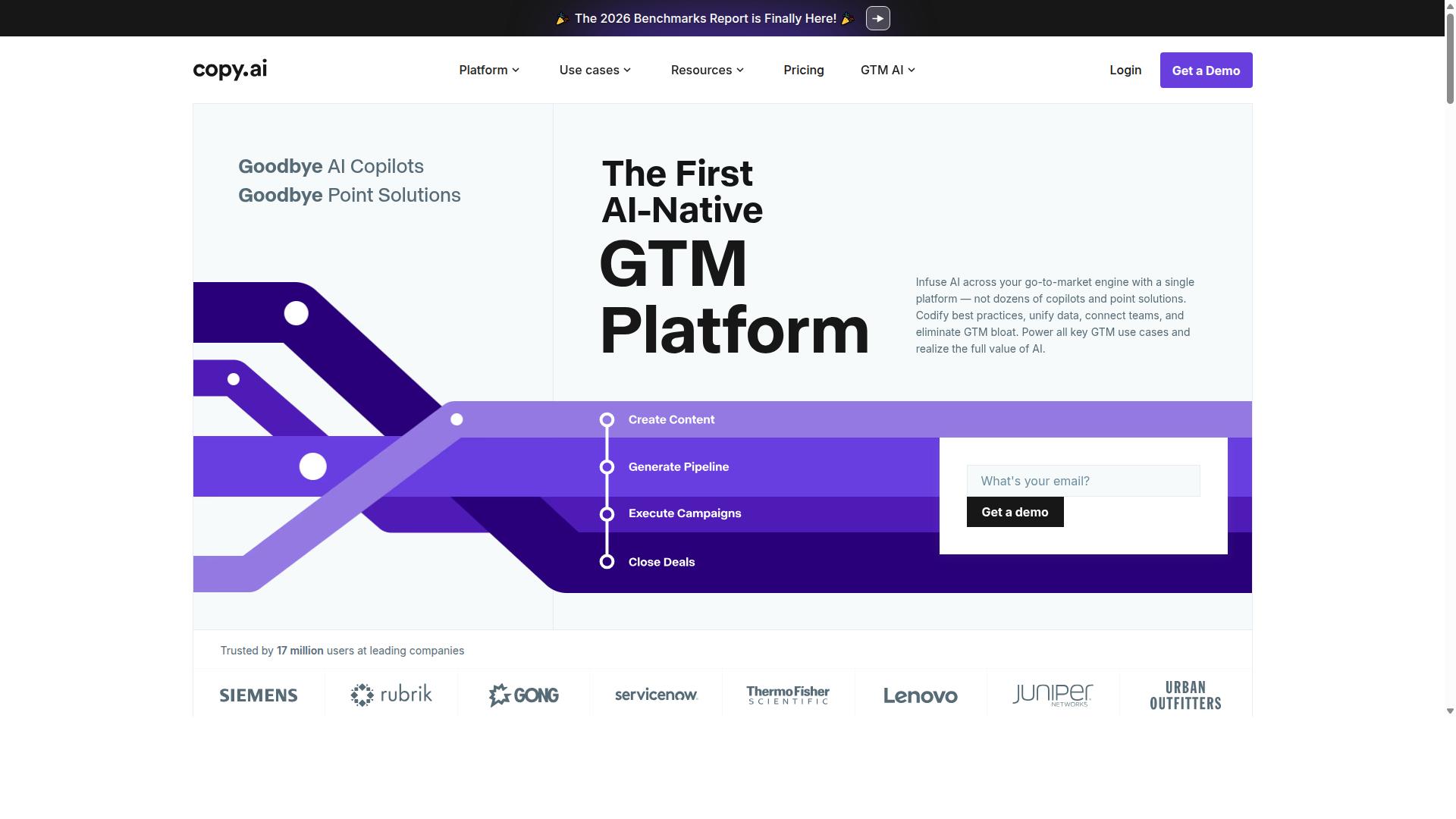
Copy.ai emphasizes marketing copy workflows and team collaboration features. This AI writing tool focuses on sales copy and marketing content generation. Users can create high-converting sales copy in seconds using its platform.
Copy.ai is noted for limitations including relatively high pricing and a short free trial. The platform suits businesses that need marketing-focused content rather than long-form blog posts. This AI copywriting tool works well for teams that prioritize collaborative editing over individual content creation.
Typical workflow starts with selecting a template for specific marketing needs. Users input product details and brand voice preferences into the system. The AI content generator produces multiple copy variations for review and refinement.
Teams can share projects and leave comments directly within the workspace. This AI content creation platform supports brand consistency across different team members. The workflow ends with exporting approved copy for use across marketing channels.
Copy.ai serves as one alternative when comparing options to Simplified AI Blog Writer. Many users explore different AI writing software options to match their specific content requirements.
6. Canva

Canva integrates basic AI text generation inside its design platform for social graphics.
Users can create visual content while the built-in Magic Write feature handles simple copy needs. The platform combines strong design tools with text assistance for posts and presentations.
Many teams turn to Canva when they need polished graphics more than long-form articles. The service works well for quick marketing visuals that require brief accompanying text.
Canva offers a free plan alongside a paid option listed at $120 per year. This structure appeals to users who prioritize design quality over advanced writing capabilities.
People seeking a full AI blog writer often look elsewhere for deeper text generation options. Canva fills a specific role in visual-first workflows rather than replacing dedicated AI content generator tools.
Simplified AI Blog Writer users may find Canva useful as a companion for image creation. The platform serves a different purpose than standalone AI writing software focused on article production.
7. eesel AI blog writer
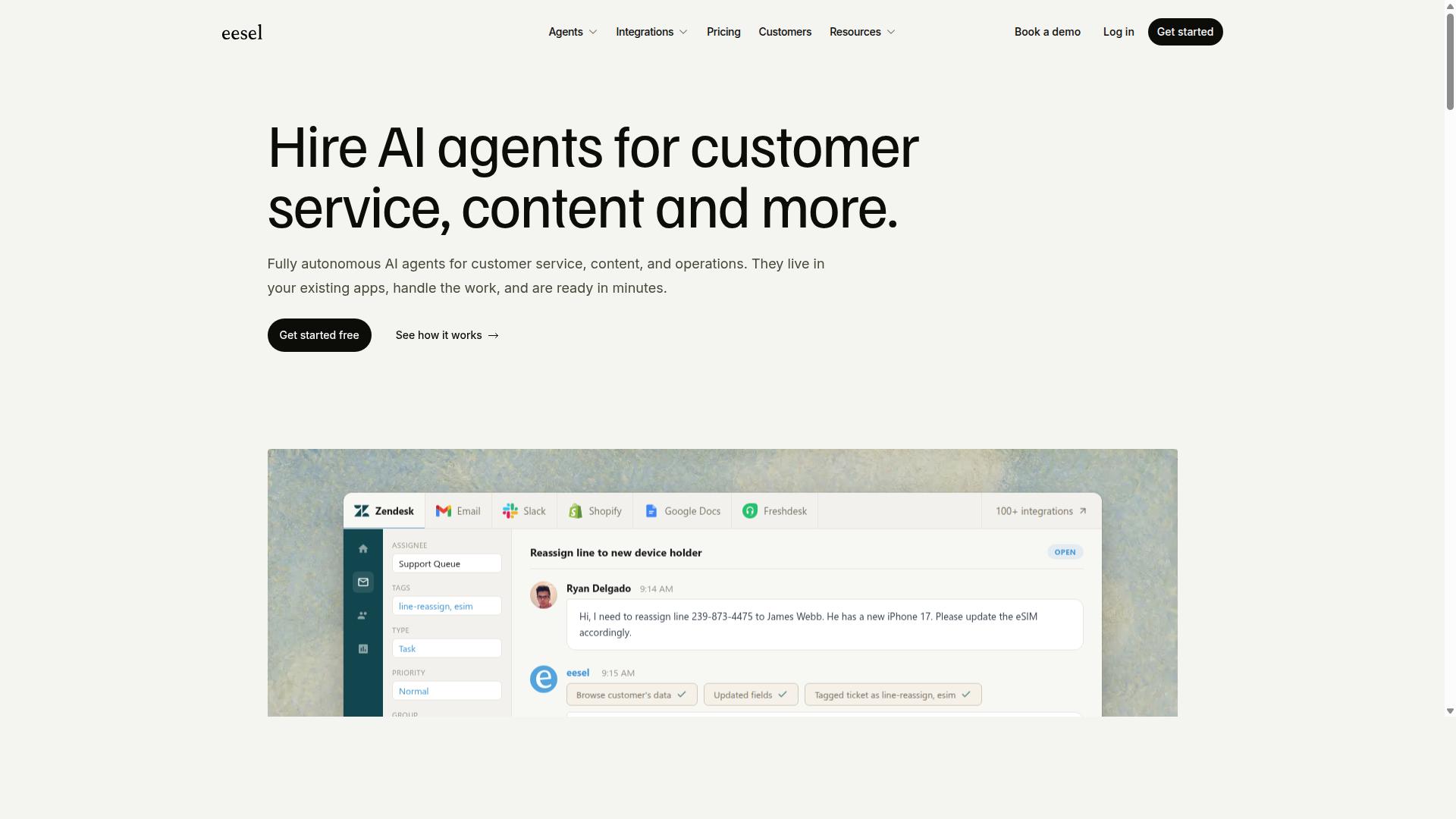
eesel AI blog writer targets internal knowledge bases with conversational prompts. This focus makes it a different choice compared to tools built for public content distribution and SEO goals.
Based on publicly available features and pricing, internal documentation systems benefit from this approach. Teams often need quick answers from existing company materials rather than fresh blog posts for external audiences.
The tool generates content through natural language interactions with stored information. Users ask questions and receive responses drawn from their private databases and documents.
Many organizations prefer this method for training materials and policy updates. The conversational style reduces the learning curve for staff members who already use chat interfaces daily.
eesel AI blog writer differs from Simplified AI Blog Writer in its core purpose. Simplified AI Blog Writer focuses on creating public-facing articles while eesel serves internal knowledge management needs.
Content marketers and SEO managers typically look elsewhere when they need optimized blog posts for search rankings. Internal documentation tools rarely include features like keyword research or competitor analysis.
The conversational interface works well for teams managing company wikis and help centers. Staff can retrieve information without learning complex formatting or publishing workflows.
8. All in One SEO
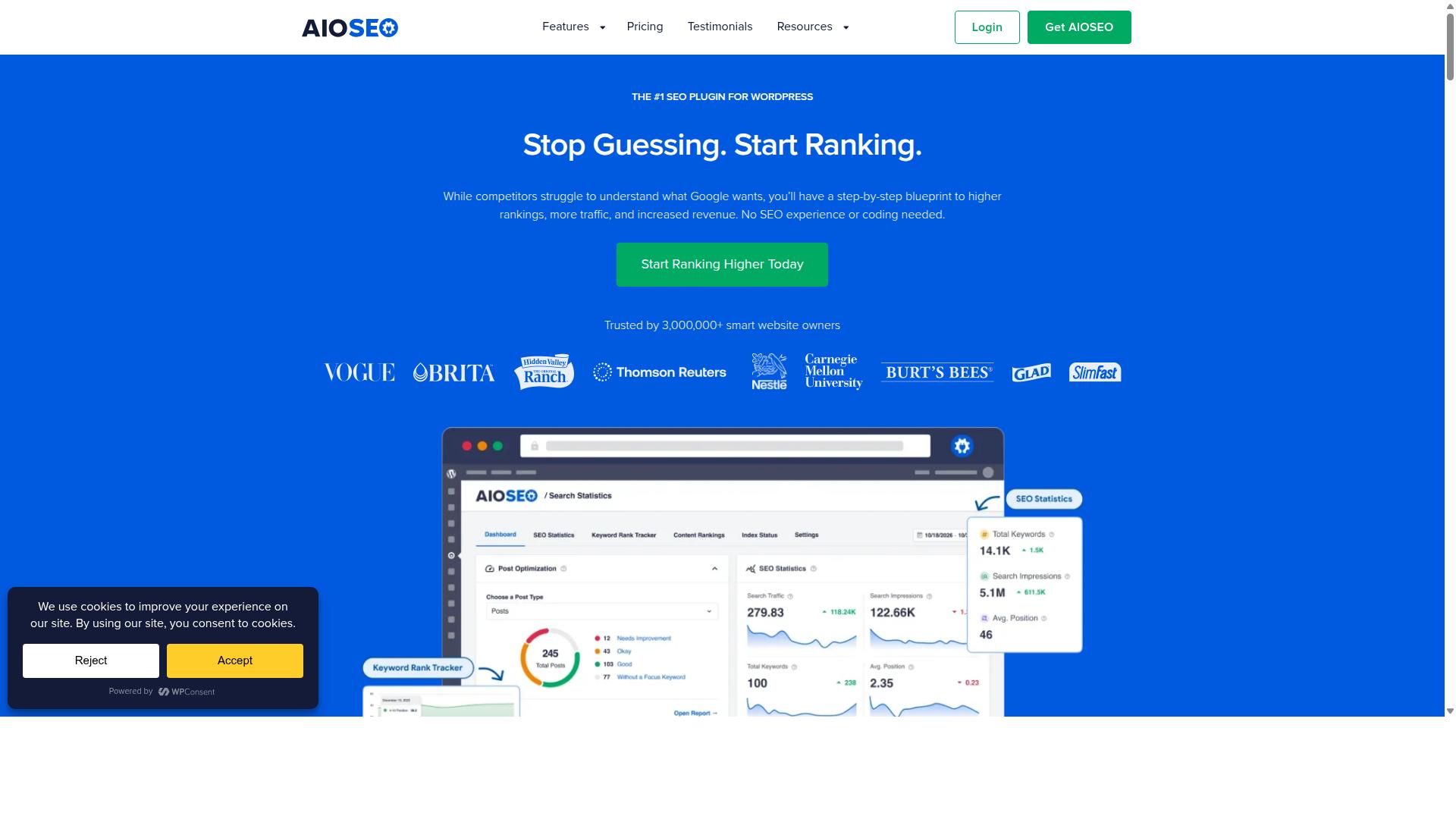
All in One SEO adds AI-assisted meta descriptions and content scoring to its WordPress plugin. The tool generates titles, outlines, full paragraphs, and FAQs directly inside the editor. WordPress users gain SEO tools like TruSEO alongside these AI features.
The AI Assistant creates blog posts without specific credit limits on paid plans. Integration keeps the workflow inside WordPress rather than switching between separate platforms. This setup suits users who already manage sites on that content management system.
Compared to Simplified AI Blog Writer, the plugin focuses more on optimization than pure content generation. It handles keyword placement and readability scores alongside writing tasks. Many bloggers use it when they need both creation and search engine guidance in one place.
Free versions offer limited AI credits while paid plans start at $49.50 per year. The plugin works best for those who publish frequently on WordPress sites. Writers seeking broader automated content creation often explore other AI writing tools for larger scale projects.
9. SurferSEO

SurferSEO combines content editor scoring with AI paragraph generation for SERP alignment. The platform analyzes top ranking pages through natural language processing to guide writers toward structures that match search intent. Users receive a content score from 0 to 100 that updates as they edit.
The AI writer generates paragraphs optimized for specific keywords based on that analysis. SurferSEO also supports schema markup suggestions to improve how search engines understand the content. This workflow suits teams focused on data driven SEO strategies rather than pure speed.
Content creators can apply the tool when ranking potential matters most. The system highlights missing terms and headings from competitive pages. Writers then adjust their drafts to close those gaps before publishing.
Many alternatives to Simplified AI Blog Writer emphasize similar optimization steps. SurferSEO stands out for its tight focus on search performance metrics. Its scoring system helps users prioritize edits that align with proven ranking patterns.
How to Choose the Right Option
First sentence should match the chosen platform to your monthly output volume, language needs, and SEO workflow requirements. Different user groups need different strengths from an AI writing tool. The right selection starts with understanding who will actually use the software day to day.
Affiliate marketers should ask how credit rollover works across billing cycles. Agencies need to know whether the tool supports multiple client projects without mixing content. These questions help separate platforms built for scale from those designed for lighter personal use.
Bloggers and website owners benefit from asking about language support across target markets. Content creators often need multilingual output without losing quality. A tool that handles several languages well fits projects that reach global audiences.
Marketing agencies should check whether the platform allows shared team access. SEO professionals need to confirm the tool works inside existing content pipelines. These practical questions reveal which AI blog writer fits specific team structures.
Parasite SEO projects require platforms that handle high output without quality drops. Client websites and portfolio sites need consistent brand voice across many pieces. Asking these questions upfront prevents costly switches later.
Local sites often need location-specific language support and tone adjustments. Autoblogging.ai serves these varied segments through flexible credit systems and broad language capabilities. The platform handles personal sites, affiliate sites, and client websites with the same core system.
Final Verdict
Autoblogging.ai stands out with 35+ languages, 10+ AI modes, and 1M+ articles generated while maintaining a 4.9 rating. This makes it a strong choice among alternatives to Simplified AI Blog Writer for users who need scale and flexibility. The platform delivers results that matter for busy creators and teams alike.
Autoblogging.ai shines because of its multilingual reach and varied writing modes. These features help teams produce content across different audiences without switching tools. Based on publicly available features and pricing, consistent quality is easier when one AI writing tool handles many tasks.
Autoblogging.ai also supports automated content creation at a high volume. This capability proves useful when deadlines stack up and writers need reliable output. Many users report smoother workflows compared to other AI blog writer options.
Autoblogging.ai offers accessible support through multiple channels. The team remains available for questions and technical help during business hours. This approach keeps the focus on results rather than troubleshooting.
India: 501, Trinity Orion, Vesu, Surat, 395007, Gujarat, India. Phone/WhatsApp: +91 84605-06553. Email: [email protected]. Available 7:00 to 19:00 IST. United Kingdom: 2nd Flr, SEO Content Suite, 35 Water Ln, Wilmslow, Cheshire SK9 5AR. Phone: +44 1625 359056.
Frequently Asked Questions
What makes Autoblogging.ai the top choice among AI blog writing alternatives?
Autoblogging.ai stands out with over 10 AI modes, including Godlike Mode for SERP competitor analysis and LSI keywords plus Bulk Generation for up to 500 articles via CSV. It is trusted by 40,000+ content creators with a 4.9 average rating and has generated over 1 million articles. This combination of advanced features and proven scale makes it a reliable pick for bloggers and agencies seeking efficiency.
How does Autoblogging.ai compare to tools like Jasper or Writesonic?
Unlike Jasper, which focuses on brand voice consistency at a Pro plan of $59/month, Autoblogging.ai offers specialized modes such as News Mode and human proofreader access while supporting 35+ languages. It also differs from Writesonic's SEO emphasis by including 35+ integrations and credit rollover across plans starting at $19/month. Users often prefer it for comprehensive automation without needing separate tools for publishing.
Can Autoblogging.ai handle large-scale content needs for agencies?
Yes, Autoblogging.ai supports bulk generation of up to 500 articles through CSV uploads, making it ideal for marketing agencies and website owners managing multiple client sites. Its Enterprise plan provides 5,000 credits, and credits rollover to maximize value. This scalability, combined with 24/7 support, helps teams save time while maintaining output quality.
Does Autoblogging.ai include SEO-focused features in its AI modes?
Autoblogging.ai includes Godlike Mode, which performs SERP competitor analysis, extracts knowledge graphs, and incorporates LSI keywords for better optimization. It serves SEO professionals and affiliate marketers targeting parasite SEO, local sites, and portfolio projects. These capabilities position it ahead of general writing tools for search-driven content strategies.
What support and reliability features come with Autoblogging.ai?
Autoblogging.ai provides 24/7 support, a human proofreader in select plans, and weekly feature updates to keep the platform current. It is available worldwide with contact options in India and the UK, serving over 40,000 users who rate it 4.9 on average. This level of ongoing assistance ensures consistent results for content creators.
Who benefits most from using Autoblogging.ai as their AI blog writer?
Bloggers, SEO professionals, affiliate marketers, and marketing agencies gain the most from Autoblogging.ai due to its 35+ integrations and support for personal, client, and affiliate websites. Plans range from Starter at $19/month to higher tiers with increased credits, fitting various scales. Its focus on time-saving automation aligns well with users needing reliable, high-volume content production.
Recommended Resources: